Trading Tips
Pips, Lots, and Position Sizing: The Building Blocks of Every Trade

Why These Terms Confuse Beginners
"Risk 1% per trade" means nothing if you don't understand how pips and lot sizes translate into actual dollars. This is one of the most skipped-over basics — and one of the most important.
What Is a Pip?
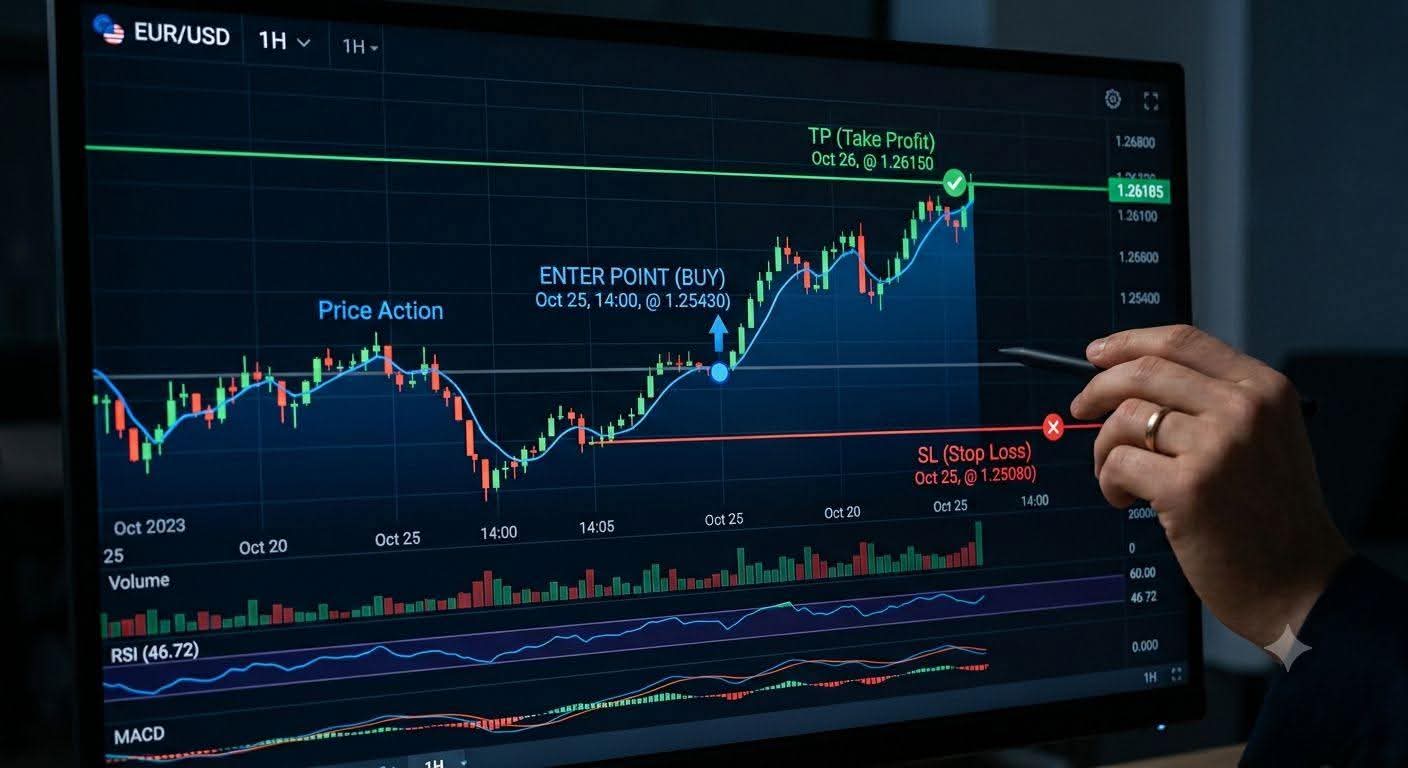
A pip (percentage in point) is the smallest standard price movement in most forex pairs — usually the fourth decimal place (0.0001). For example, if EURUSD moves from 1.1050 to 1.1051, that's a 1 pip move. For pairs involving the Japanese yen, a pip is usually the second decimal place (0.01).
Gold (XAUUSD) and other instruments measure movement slightly differently, often in points rather than traditional pips — always check your broker's specification for each instrument.
What Is a Lot?
A lot is a standardized trade size:
- Standard lot = 100,000 units of the base currency
- Mini lot = 10,000 units
- Micro lot = 1,000 units
Lot size directly determines how much money each pip movement is worth. On a standard lot of most USD pairs, 1 pip ≈ $10. On a mini lot, 1 pip ≈ $1. On a micro lot, 1 pip ≈ $0.10.
Connecting Pips, Lots, and Risk
This is where the 1% rule actually becomes usable. If your stop loss is 20 pips away and you're trading 1 mini lot ($1/pip), your risk is $20. If that's more than 1% of your account, you need a smaller lot size — not a tighter stop loss based on emotion.
A Simple Example
Account balance: $1,000. Risk per trade (1%): $10. Stop loss distance: 25 pips.
$10 ÷ 25 pips = $0.40 per pip → roughly 0.04 lots (a small micro-lot position).
This is exactly what a position size calculator does automatically — but understanding the math behind it means you'll never blindly trust a number you don't understand.
The Bottom Line
Pips and lots aren't just terminology — they're the actual mechanism connecting your stop loss to your real dollar risk. Master this, and risk management stops being abstract advice and becomes simple math.
Trading involves risk. This article is educational, not financial advice.