Trading Tips
Forex Leverage Explained for Beginners: 1:100 vs 1:500 vs 1:2000
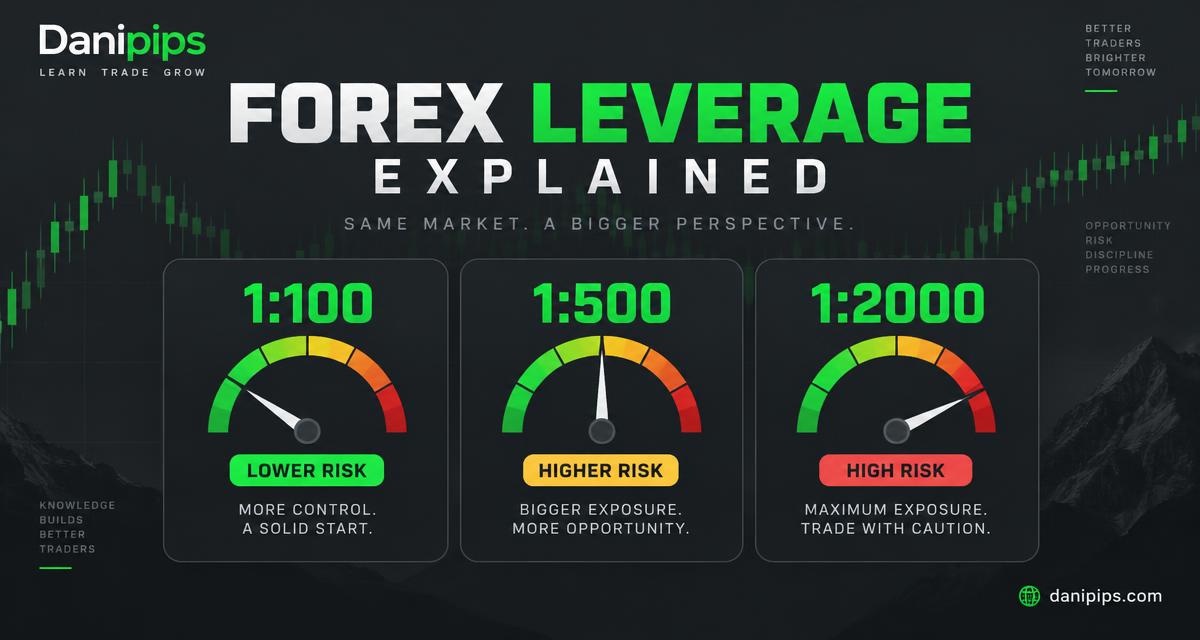
Leverage is the first setting every new trader sees when opening an account — and the one that burns the most beginner accounts. This guide explains what forex leverage really is, how 1:100, 1:500 and 1:2000 compare, how margin is calculated, and how to use leverage without blowing up a small account.
What is leverage in forex?
Leverage lets you control a larger position than your deposit. With 1:100 leverage, every $1 in your account can control $100 in the market. Your broker sets aside a small part of your balance as margin (a good-faith deposit) while the trade is open.
Important: leverage does not change your profit or loss per pip. Your lot size does. Leverage only changes how much margin is locked up — and therefore how many positions (and how much risk) you can open.
How margin is calculated
The basic formula is:
Margin = (Lot size × Contract size × Price) ÷ Leverage
Example: buying 0.10 lot EUR/USD at 1.1000 (contract 100,000 units):
| Leverage | Position value | Margin required |
|---|---|---|
| 1:100 | $11,000 | $110 |
| 1:500 | $11,000 | $22 |
| 1:2000 | $11,000 | $5.50 |
The position — and the dollar value of each pip (about $1 per pip) — is the same in all three cases. Only the margin changes.
1:100 vs 1:500 vs 1:2000 — what's the real difference?
- 1:100 — needs more margin per trade. This naturally stops you from opening oversized positions. A calm choice for beginners.
- 1:500 — more free margin, more flexibility. Useful if you size trades properly, dangerous if you don't.
- 1:2000 or higher — almost no margin needed. You can open huge positions with $50, which is exactly how small accounts get wiped out in one news spike.
High leverage is a tool, not a strategy. The risk comes from trading too big a lot size, which high leverage makes easy.
A $100 account example
You have $100 and a 20-pip stop loss on EUR/USD.
- Sensible: risk 2% = $2 → 0.01 lot (≈ $0.10/pip × 20 pips = $2). Margin at 1:500 ≈ $2.20.
- Reckless: 0.50 lot because 1:2000 "allows it" → $5/pip × 20 pips = $100 loss — the whole account on one stop.
Same leverage, completely different outcome. Use the Position Size Calculator and Pip Value Calculator before every trade.
Margin call and stop out
When losses reduce your equity, your margin level (Equity ÷ Used margin × 100%) falls. If it drops to your broker's margin call level you get a warning; at the stop-out level the broker closes positions automatically. Check your account's exact levels in your broker's Personal Area — they differ by account type.
Safe leverage rules for beginners
- Risk only 1–2% of your balance per trade.
- Always set a stop loss before entering.
- Choose lot size from your stop distance, not from available margin.
- Avoid holding big positions through major news (NFP, CPI, rate decisions) — see our economic calendar.
- Practise on a demo account first.
For more small-account tips read How to Start Forex Trading with $50 or $100 and How to Calculate Lot Size on Gold.
Which broker offers flexible leverage?
Danipips recommends Exness, which lets traders choose their leverage level (availability depends on your region, account type and equity). You can lower it any time to keep control.
👉 Open your Exness account here
Key takeaways
- Leverage changes margin, not profit per pip.
- Lot size decides your real risk.
- 1:100 protects beginners from themselves; very high leverage needs strict discipline.
- Size every trade with a calculator and never risk more than 2%.
Risk warning: Trading leveraged products such as forex and CFDs carries a high risk of losing money. Only trade money you can afford to lose.