Trading Tips
Forex Spreads Explained: Why Trades Start Negative
A new forex trade can show a loss immediately, even when the market barely moves. For a standard bid/ask-priced trade, the main reason is usually the spread: the difference between the price available to buyers and the price available to sellers. Commissions, where applicable, can add another cost.
This guide explains forex spreads with simple examples, shows why the same spread matters more on short-distance trades, and gives you a checklist before opening a position. All prices below are invented teaching examples, not live quotes or trading recommendations.
What is a spread in forex?
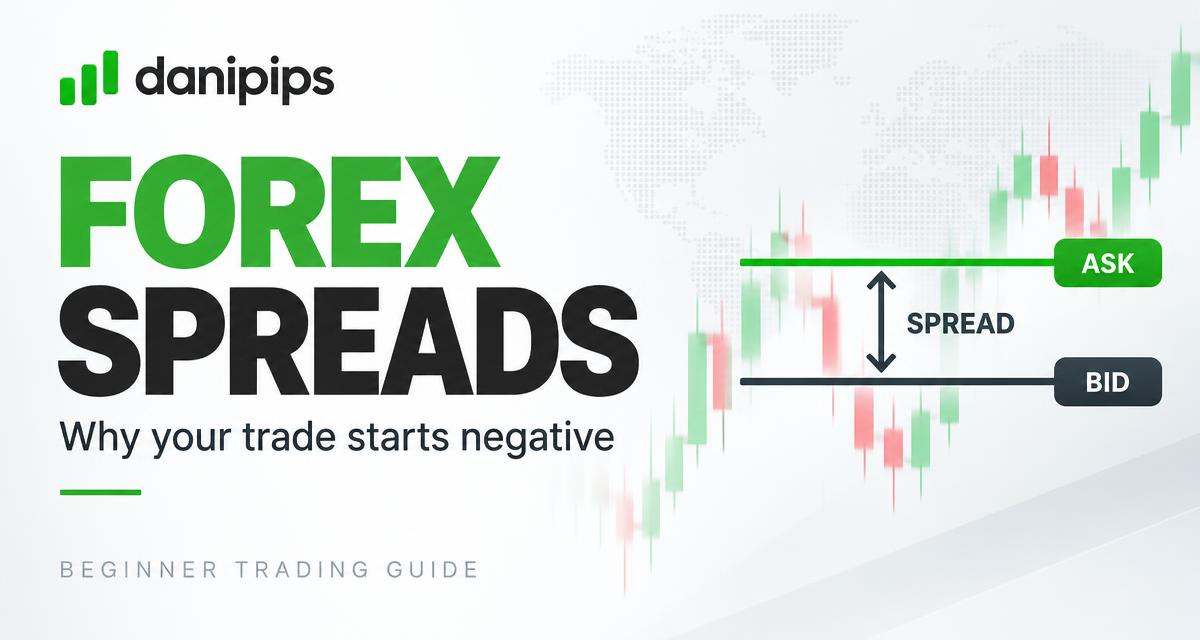
The bid is the price at which you can sell. The ask is the price at which you can buy. The ask is normally higher than the bid, and the gap is the spread.
Spread = ask price − bid price.
Suppose EURUSD shows a bid of 1.10000 and an ask of 1.10012. The gap is 0.00012. For EURUSD, one pip is 0.0001, so this example has a 1.2-pip spread. A five-decimal price quote does not change the standard pip size: the last decimal is a fractional pip.
You can review the terminology in the Danipips pip glossary and continue with the free Trading Academy.
Why does my trade start negative?
A buy position opens at the ask. If you close it immediately, you sell at the bid. With prices unchanged, you receive less than you paid because of that bid/ask gap.
Using the example above, buying EURUSD at 1.10012 and immediately closing at 1.10000 produces a 1.2-pip loss before any additional charges. A sell position opens at the bid and closes at the ask; the same gap works against an immediate exit.
This does not by itself mean that your broker manipulated the trade. Check the bid, ask, execution price and any commission in your trade history. An unusually large difference still deserves investigation rather than an automatic assumption that every charge is normal.
How to calculate spread cost in dollars
For a USD-denominated account trading EURUSD, assuming the usual 100,000-unit standard lot, 0.01 lot represents 1,000 euros. Its pip value is approximately $0.10 per pip.
Estimated spread cost = spread in pips × pip value for your position.
At a 1.2-pip spread, the approximate cost is:
- 0.01 lot: 1.2 × $0.10 = $0.12.
- 0.10 lot: 1.2 × $1.00 = $1.20.
- 1.00 lot: 1.2 × $10.00 = $12.00.
These calculations exclude commissions, swap and execution differences. Other currency pairs, account currencies and contract sizes require different pip-value calculations. Do not reuse the EURUSD dollar value for every instrument.
Check the pip value calculator and position size calculator, then confirm the symbol specifications on your trading platform.
Why a small spread can matter on a small account
Imagine a $100 account with a planned $1 risk budget. A $0.12 spread cost is equivalent to 12% of that budget. Whether it is already reflected in your planned stop-loss distance depends on which price you use to measure that distance; do not automatically add it twice.
Measure the loss from your actual expected entry to your actual stop execution, including relevant commissions. Do not calculate risk from a chart line alone if that chart displays only the bid while your buy order enters at the ask.
A minimum trade size can also prevent a position from fitting your risk budget. If the smallest available position is too large for a sensible stop, skip the trade or practice on demo rather than moving the stop closer just to make the numbers fit.
See the small-account beginner guide for more context.
Why do spreads widen?
Spreads can change as liquidity and uncertainty change. Common situations include:
- Important economic releases, when prices move quickly and quotes can change sharply.
- Thin trading periods or market openings, when fewer participants are quoting.
- Daily rollover periods, depending on the instrument and broker.
- Sudden shocks, holidays or unusually volatile conditions.
There is no universal spread that stays constant all day. Session overlap can improve liquidity, but it does not guarantee the lowest spread. Check the actual quote before every entry, particularly around scheduled news.
Use the economic calendar on Danipips to identify upcoming events; its times must be interpreted using the timezone shown. For planning sessions, read the Nigeria, Kenya and UAE trading-hours guide.
What about gold spreads?
For XAUUSD, a price gap and its cash impact are easier to understand if you check ounces rather than guessing what a broker means by a gold pip.
Suppose the bid is $2,350.00 and the ask is $2,350.30 per ounce. The gap is $0.30 per ounce. If, and only if, the symbol specification says one standard lot represents 100 ounces, then 0.01 lot represents one ounce. The approximate immediate spread cost is $0.30 for that position, before commission or execution differences.
Gold contract sizes and point/pip conventions can differ. Confirm your exact symbol before using this calculation. The hypothetical $2,350 price is not a current market quote.
Spread is not the only trading cost
Compare total costs rather than the advertised spread alone. Depending on the account and instrument, costs may include spread, commission, overnight financing or swap, and currency conversion. Slippage means an order executes at a different price from the one expected; it can increase or reduce execution cost.
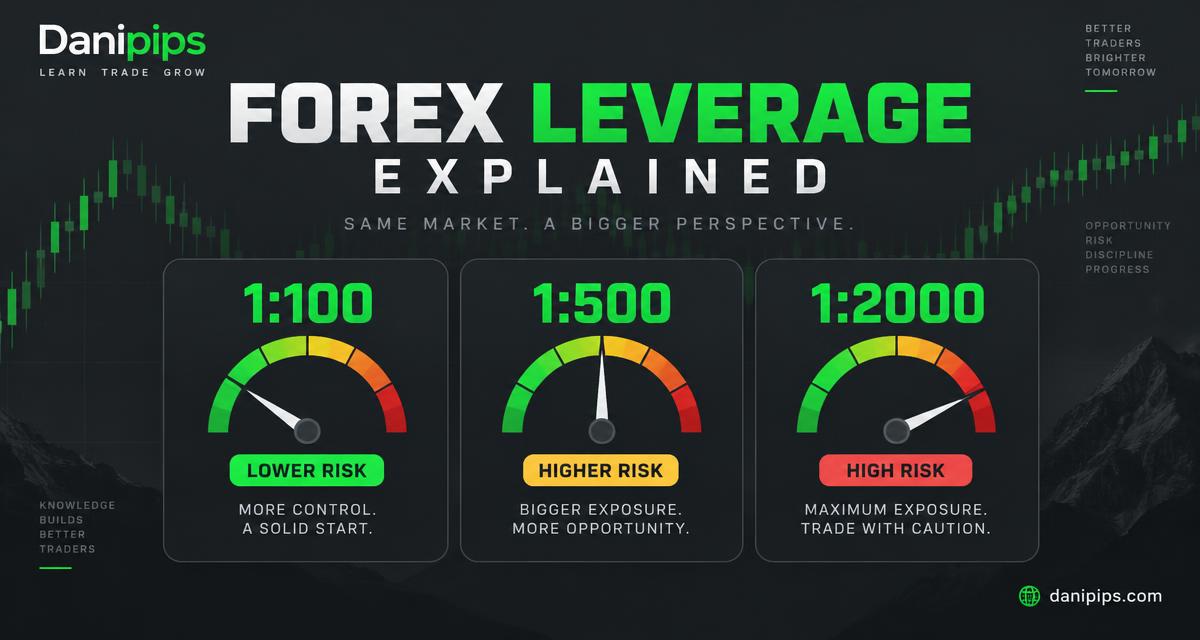
A narrow-spread account with commission is not automatically cheaper than a wider-spread account without commission. Compare the same instrument, position size and holding period. Margin requirements are a separate issue: more leverage does not remove spread costs or reduce the loss caused by a given price move at the same position size.
Before you place your next trade
- Read both bid and ask prices, not just the chart.
- Calculate the spread cost for your actual position size.
- Check commission and overnight charges where applicable.
- Look for upcoming high-impact events.
- Set risk from expected entry to stop execution, allowing for relevant costs and possible slippage.
- Skip the trade if costs make it unsuitable for your plan.
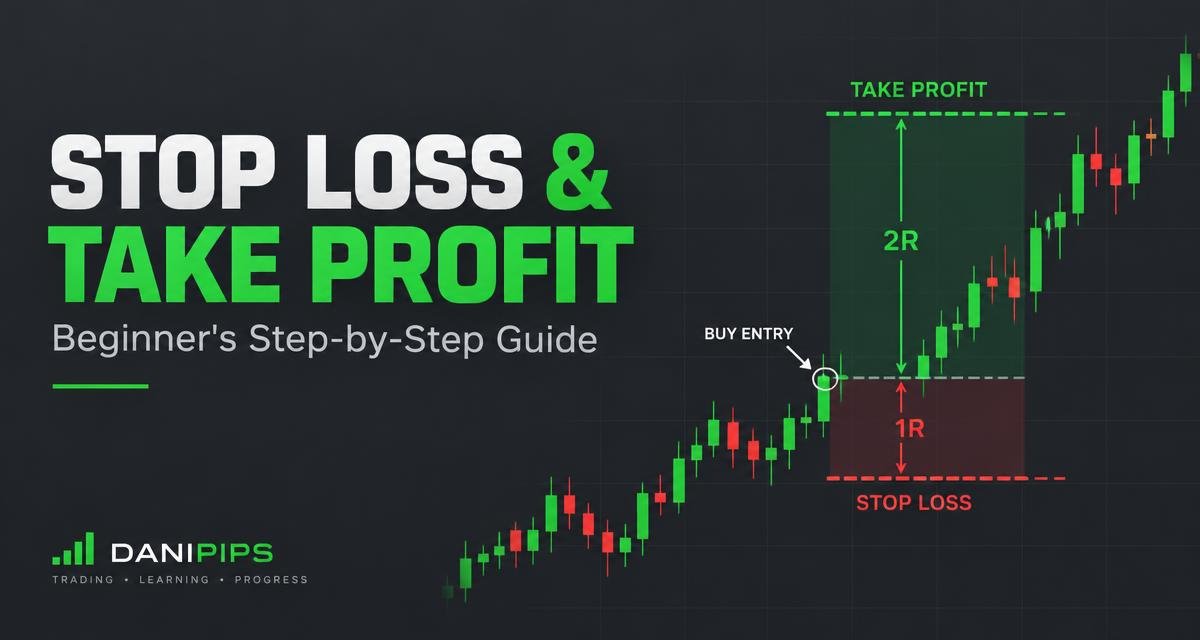
Learn how exits work in the stop-loss and take-profit guide. A normal stop-loss is not a guaranteed execution price, especially during gaps or fast markets.
Practise before risking real money
On demo, record the spread at entry, position size, any commission and the immediate profit/loss shown. Repeat at different times without assuming demo fills will match live execution.
If you want to explore Exness, use the official Danipips Exness partner link and check the current account conditions and symbol specifications. Availability and terms vary by country and account. This is a referral link; Danipips may earn a commission if you become a qualifying referred client, depending on the partner terms.
Have a question about a cost calculation? Ask the Danipips AI Tutor, using example numbers rather than sharing private account details.
Bottom line: a trade starting negative is often the normal effect of crossing the spread. Understand the full cost before entering, keep position size compatible with your risk budget, and practise first. Leveraged forex and CFDs carry a high risk of loss. This article is educational and does not promise profits.