Broker Review
How to Choose a Forex Broker: 7 Things Beginners Must Check
Choosing a forex broker is the first real decision you make as a trader — and for many beginners, it is also the first expensive mistake. A bad broker can cost you money through wide spreads, slow withdrawals, hidden fees, or in the worst cases, by simply disappearing with your deposit.
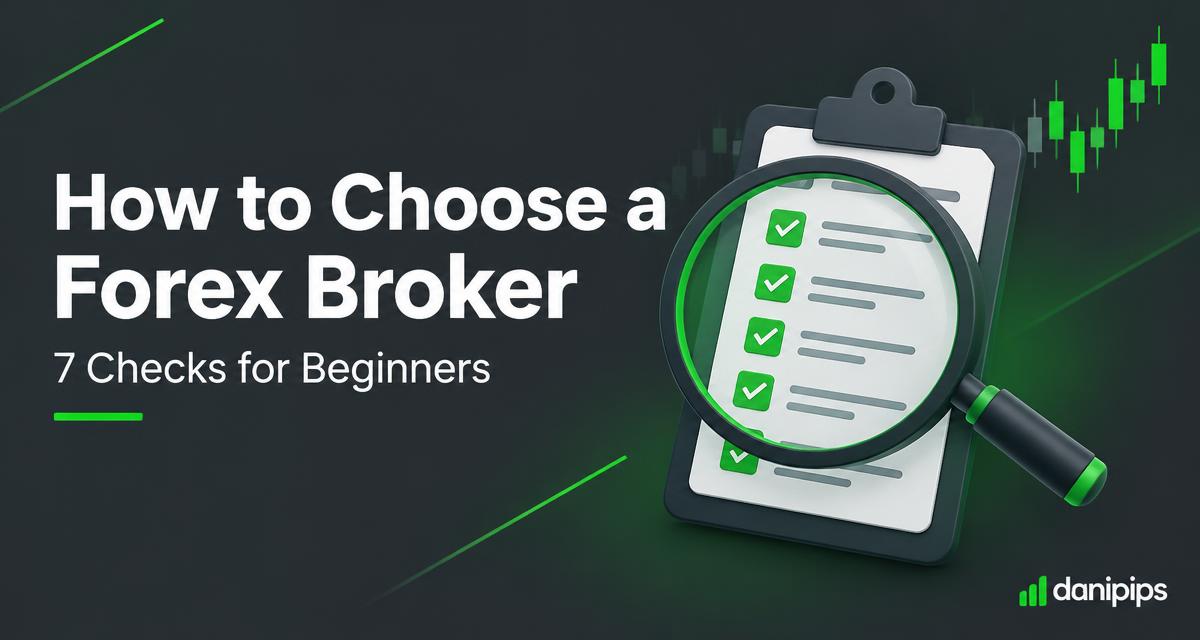
The good news: you do not need to be an expert to filter out bad brokers. You only need to know what to check. This guide walks you through the 7 checks experienced traders run before opening an account — explained in plain language, with no jargon.
Why the broker choice matters more than your strategy
A beginner with a simple strategy and a good broker will almost always do better than a beginner with a clever strategy and a bad broker. Your broker controls:
- The price you pay on every trade (spread and commission)
- Whether your money is safe and legally protected
- How fast you can withdraw your profits
- The platform and tools you trade on every day
Spend one hour on these checks now, and you save yourself months of frustration later.
Check 1: Regulation — is the broker licensed?
Regulation is the single most important check. A regulated broker is supervised by a financial authority that forces it to follow rules: keeping client money in separate (segregated) accounts, maintaining minimum capital, and submitting to audits.
What to look for:
- Licenses from recognized regulators — for example the FCA (UK), CySEC (Cyprus), ASIC (Australia), FSCA (South Africa), or FSA (Seychelles)
- The license number displayed on the broker''s website — and verifiable on the regulator''s own website
- Clear information about which legal entity your account falls under
Red flag: a broker with no license, or one registered only in an unknown offshore island with no real supervision. If a broker is not regulated, nothing else on this list matters — walk away.
Check 2: Spreads and trading costs
Every trade you open costs money. The two main costs are:
- Spread — the difference between the buy and sell price. On EUR/USD, a good broker offers roughly 0.0–1.0 pips on a raw/standard account.
- Commission — some accounts charge a fixed fee per lot instead of (or on top of) the spread.
Also check swap fees (the overnight holding cost) if you plan to keep trades open for days, and any inactivity or withdrawal fees hidden in the terms.
Beginner tip: do not chase the absolute lowest spread. A slightly higher spread at a trusted, regulated broker beats a "zero spread" promise from a broker you cannot verify.
Check 3: Deposit and withdrawal options
A broker can look perfect until you try to get your money out. Before depositing, confirm:
- Which methods are supported in your country — bank cards, bank transfer, e-wallets (Skrill, Neteller), mobile money, or crypto
- Withdrawal processing time — good brokers process within 24 hours; bad ones stall for weeks
- Minimum deposit — many beginner-friendly brokers start at $10 or less
- Withdrawal fees — some brokers charge per withdrawal; the best ones charge nothing
Search for real user reviews specifically about withdrawals. A broker with fast deposits but slow withdrawals is telling you something important.
Check 4: The trading platform
You will spend hours inside the trading platform, so it needs to be reliable and easy to use. The industry standards are:
- MetaTrader 4 (MT4) — simple, stable, huge library of indicators
- MetaTrader 5 (MT5) — newer, more timeframes and instruments
- The broker''s own app or web terminal — check that it works well on your phone
Whatever the platform, test it first on a demo account. If the app freezes, lags, or confuses you during demo trading, it will be worse with real money on the line.
Check 5: Account types and a free demo account
A good broker lets you practice before you risk real money. Look for:
- A free, unlimited demo account with virtual funds
- A cent or micro account so you can trade real money in tiny sizes while learning
- Reasonable leverage options — and the ability to lower your leverage yourself
The demo account is non-negotiable for beginners. It is how you learn the platform, test strategies, and build confidence without losing a cent. We wrote a full step-by-step guide here: How to Open a Free Exness Demo Account.
Check 6: Customer support you can actually reach
When your money is involved, support quality matters. Test it before you deposit:
- Open the live chat and ask a real question — how fast and how helpful is the answer?
- Is support available 24/7 or only during office hours?
- Do they support your language?
A broker that ignores you when you are a potential customer will definitely ignore you when you have a withdrawal problem.
Check 7: Reputation and real user reviews
Finally, check what other traders say. Look at:
- Trustpilot and forex forums — read the negative reviews first, and see how the broker responds to complaints
- How long the broker has been operating — a broker with 10+ years of history has survived multiple market crises
- Patterns in complaints — one angry review means little; fifty reviews about the same withdrawal problem means everything
Our recommendation for beginners: Exness
After running these checks ourselves, the broker we recommend to beginners is Exness. Here is why it passes all 7 checks:
- Regulated by multiple authorities including the FCA, CySEC, FSCA and FSA
- Tight spreads — from 0.0 pips on major pairs, with transparent pricing
- Fast, free withdrawals — most withdrawals are processed instantly, 24/7, with no broker-side fees
- MT4, MT5 and a clean mobile app that works well even on slower connections
- Free unlimited demo account plus a Standard Cent account for tiny real-money practice
- 24/7 support in multiple languages
- Operating since 2008 with millions of clients and a strong public track record
You can open a free account in a few minutes and start with a demo — no deposit needed:
👉 Open your free Exness account here
Then follow our step-by-step demo account guide to set everything up.
Quick checklist before you deposit
Before sending money to any broker, confirm all of these:
- [ ] Regulated by a recognized authority (license verified)
- [ ] Spreads and fees are clearly published
- [ ] Withdrawal method works in your country, with fast processing
- [ ] Platform tested on demo and runs smoothly
- [ ] Free demo account available
- [ ] Support answered your test question quickly
- [ ] Reviews show no pattern of withdrawal problems
If a broker fails even one of these, keep looking. There are enough good brokers that you never need to settle for a questionable one.
Final word
Your broker is your business partner in trading. Choose it the way you would choose a bank: slowly, skeptically, and based on evidence — not advertising. Run the 7 checks, start on demo, and only deposit money you can afford to trade with.
Trading forex involves risk. Never trade with money you cannot afford to lose, and always practice on a demo account first.