Trading Tips
Prop Firm Challenge for Beginners: Rules, Costs, and How to Actually Pass
What is a prop firm?
A prop firm (proprietary trading firm) lets you trade with the firm's capital instead of your own. The usual path looks like this: you pay an evaluation fee, pass a challenge with strict rules, and if you succeed you get a funded account where you keep a share of the profits — commonly 70–90%.
For a beginner with a small account, this sounds perfect: you risk a $50–$150 fee instead of your life savings, and you get access to trading capital you could never fund yourself. And it can work that way. But it is important to be honest from the start: most people who buy a challenge never reach a payout. Knowing exactly what you are buying — the rules, the real costs, and the math — is the difference between a calculated attempt and a lottery ticket.
This guide explains how a typical prop firm challenge works, what it really costs, why most traders fail it, and a realistic step-by-step plan to give yourself an actual chance of passing.
How a typical challenge works
Every firm sets slightly different rules, but almost all challenges follow the same structure:
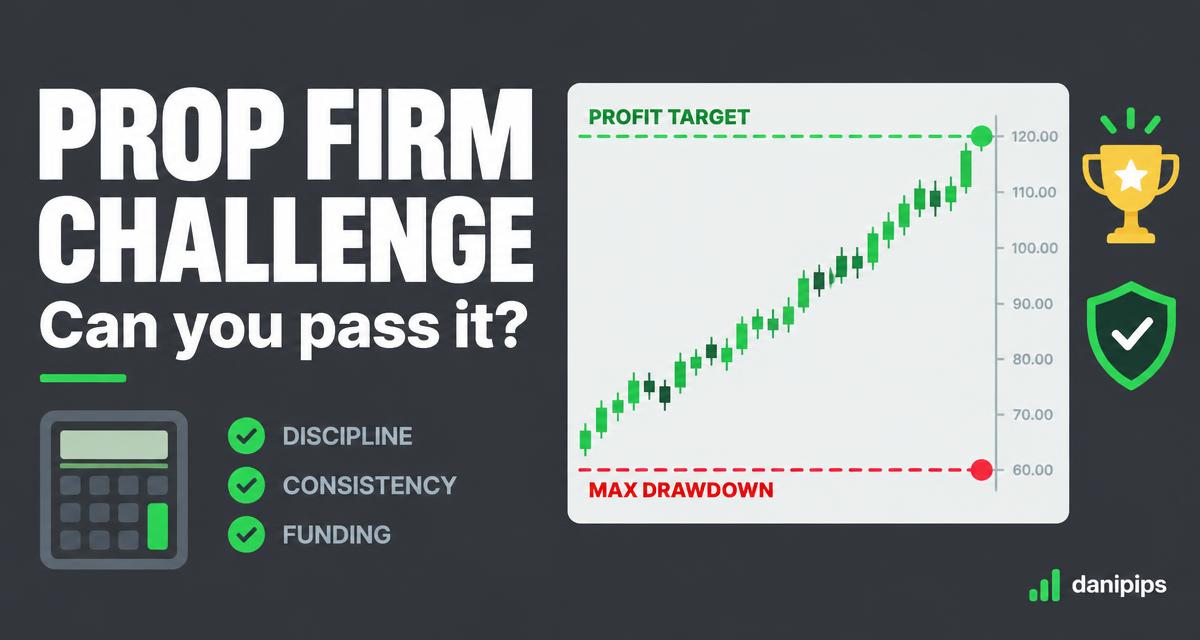
- Profit target — usually 8% in phase one (some firms add a second phase at 5%)
- Max overall drawdown — usually 5–10% of the starting balance; lose more than this and the challenge ends
- Daily loss limit — often 4–5% of the balance for a single day, including floating losses
- Minimum trading days — often 3–5 days; you cannot pass in one lucky trade
- Time limit — some firms give 30 days, others unlimited
- Leverage — often around 1:100 on forex pairs
Worked example — a $10,000 challenge:
| Rule | Value | What it means |
|---|---|---|
| Profit target | 8% | You must make +$800 |
| Max drawdown | 5% | Total losses (open + closed) may not exceed $500 |
| Daily loss limit | 4% | You may not lose more than $400 in one day |
| Minimum days | 5 | At least 5 separate trading days |
Notice something beginners usually miss: both loss limits include floating losses. If you are down $300 on an open trade and it later comes back, your worst point is what counts. This is why setting a stop loss on every trade is not optional in a challenge — it is the pass condition.
The math most beginners skip
Suppose you risk 1% ($100) per trade on the $10,000 account. The 5% max drawdown means five full stop-outs in a row end your challenge. That is a thin cushion.
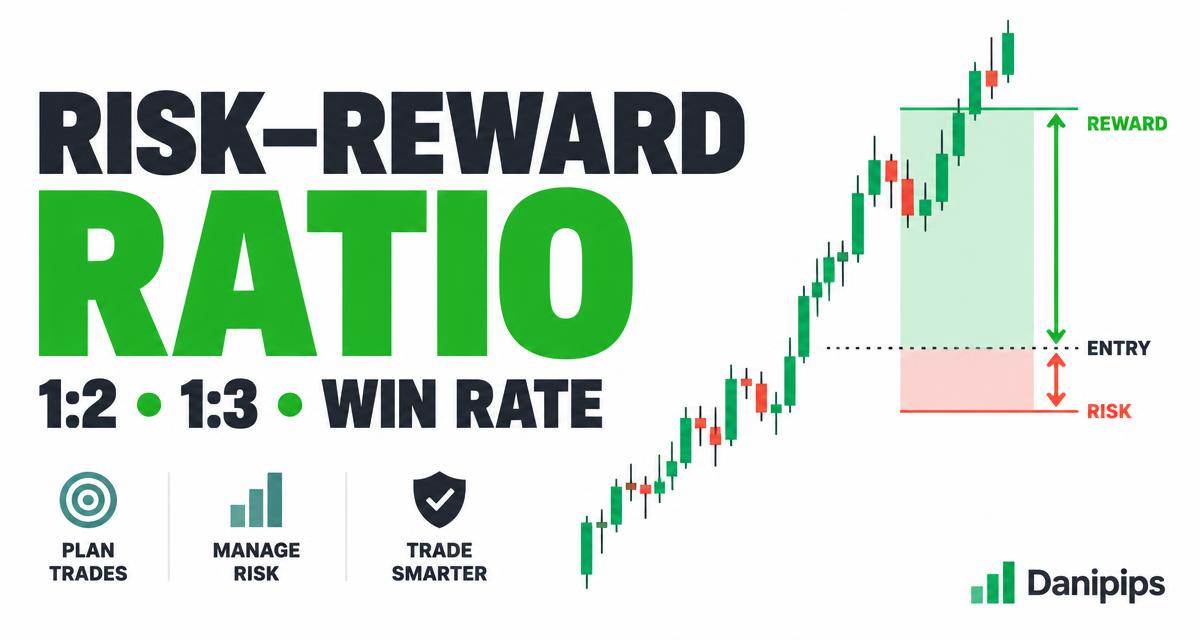
Now add the win rate. With a risk–reward ratio of 1:2, you only need to win about 33% of your trades to break even — and more than that to grind toward the 8% target. The math works, but only if you:
- Never risk more than your planned amount per trade
- Never stack a second trade while the first is losing
- Stop trading for the day after your daily loss allowance is used
The failure point is almost never the strategy — it is rule-breaking under pressure. A trader who risks 2% "just this once" and adds to a losing position blows a 5% drawdown in three trades.
What it really costs
The fee is only part of the cost. Before you buy anything, check:
- Entry fee — typically $50–$150+ for a $10,000 evaluation, and it is usually not refunded if you fail
- Reset fee — some firms charge again to restart after a failed attempt
- Monthly subscription models — some firms charge per month instead of a one-time fee
- Refund policies — some firms refund the fee only after your first payout, not on passing
- Consistency rules — some firms block payouts if too much profit came from one day or one trade
Read the payout section of the terms before paying, not after. If the profit split is 80/20 and payouts are on demand, that is normal. If there are vague conditions about "profit consistency" or account verification, understand them first.
Why most people fail
Industry-wide, the majority of challenge attempts fail, and the reasons repeat:
- Risking too much per trade — three 2% losses and one revenge trade ends a 5% drawdown
- Breaking the daily loss limit — overtrading after a loss, or holding a losing position past the limit
- Rushing the target — treating the time limit as a deadline to force trades
- Ignoring floating drawdown — "it always comes back" thinking until the account is closed
- Treating the fee as a lottery ticket — buying attempt after attempt without fixing the process
None of these are knowledge problems. They are discipline problems, which is why the plan below starts on a free demo, not a paid challenge.
A realistic plan to pass
Step 1 — Pass a self-imposed challenge on a demo first. Open a demo account with the same size ($10,000), the same rules (8% target, 5% max drawdown, 4% daily limit), and try to pass over 30 days. This costs nothing and tells you the truth: if you cannot pass your own challenge on a demo, the paid version will only cost you the fee.
Step 2 — Fix your risk before the target. Risk 0.5–1% maximum per trade, and cap your day at two losses. Use a position size calculator on every trade — for gold, the lot size math is different from forex pairs, so check how to calculate lot size on XAUUSD.
Step 3 — Trade fewer, better setups. The target does not need daily heroics. Two or three well-planned trades per day with a 1:2 reward beat twenty emotional ones. If you trade the London or New York open, a simple scalping framework with strict risk rules works better than improvising.
Step 4 — Journal every trade. Write down entry, stop, reason, and result. After 30 days you will know whether your edge is real. A challenge passes on statistics over weeks, not one good Friday.
Step 5 — Verify the firm before paying. Check that the firm names its regulator or legal entity, has real independent reviews, and publishes clear payout rules. Be cautious with firms that promise unrealistic profit splits, have no company details, or spam you with "limited slots" marketing.
Honest warnings
- A prop challenge is not free money. The fee is a real cost, and most attempts fail.
- Some firms sell simulations, not real capital. Understand whether you are trading the firm's actual funds or a simulated evaluation product — both can be legitimate, but you should know which you are buying.
- No strategy guarantees a pass. Anyone selling a "100% pass EA" is selling to you, not trading for you.
- This is not a replacement for learning. If you cannot yet explain what a pip is or how margin and stop out levels work, a challenge is premature — the free course is a better next step.
FAQ
What percentage of traders pass a prop firm challenge?
Firms rarely publish exact figures, and public estimates vary widely — commonly cited numbers suggest only a minority of attempts lead to a funded account. Treat every attempt as one where failure is the default outcome and your job is to beat the rules, not the odds.
What happens when you pass?
You usually receive a funded account (real or simulated, depending on the firm), a profit split (commonly 80% to you), and payout rules that specify minimum profit amounts and frequency.
How long does it take to pass?
With a realistic 0.5–1% risk per trade, reaching an 8% target typically takes weeks of consistent trading, not days. Challenges that allow unlimited time are friendlier to this approach.
Is a prop firm better than trading my own $100?
They solve different problems. A small personal account (see the $50–$100 account guide) teaches you live-market discipline cheaply. A prop firm scales you after you have proven discipline. Do them in that order.
Practice on a free demo first
Before you pay any firm a challenge fee, prove the process on a free demo account. We recommend opening a free Exness demo — it takes a few minutes, needs no deposit, and lets you run the exact 8% target / 5% drawdown simulation from this article. When you can pass your own challenge on a demo, you will know exactly what to do with a paid one.
Disclosure: the link above is Danipips' Exness referral link. Trading involves risk; never trade money you cannot afford to lose, and treat challenge fees as tuition, not investment.