Trading Tips
Forex Margin Explained: Free Margin, Margin Level and Stop Out for Beginners
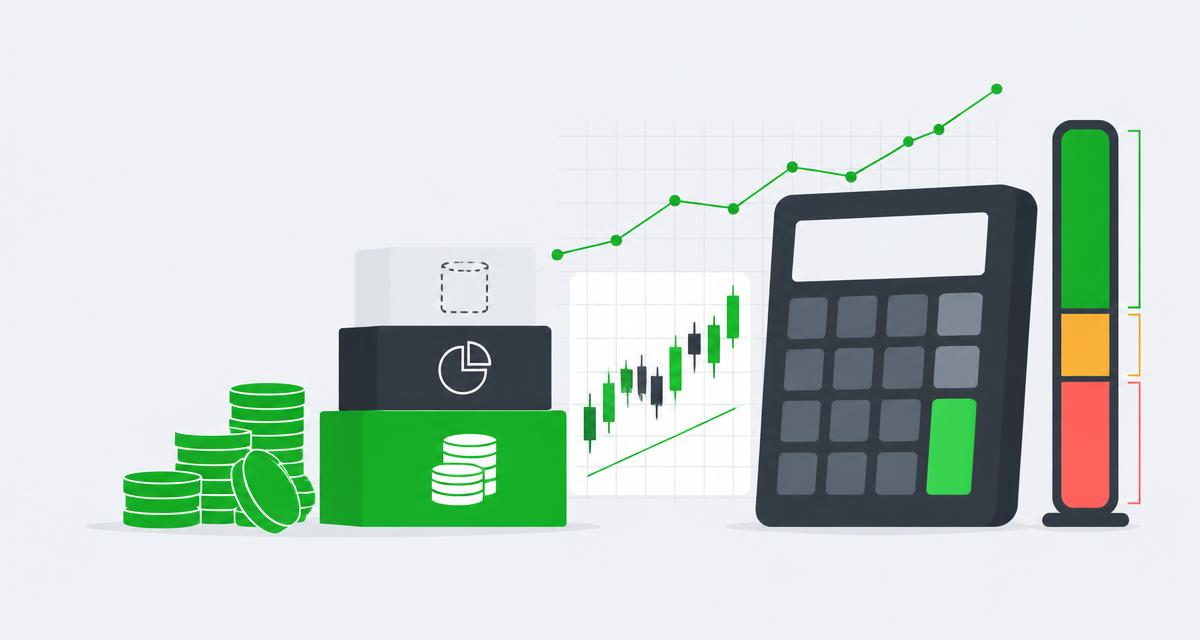
A trade can be losing money even while your account balance looks unchanged. That is why margin, equity and free margin matter more than the deposit figure alone. If you trade forex with leverage, understanding these numbers helps you recognise pressure on your account before a broker starts closing positions.
This beginner guide explains forex margin with a worked EURUSD example, the difference between a margin call and stop out, and a practical demo-account checklist. It is education, not a trade signal or a promise of profit.
What is margin in forex?
Margin is the amount your broker requires to support an open leveraged position. It is not the full value of the trade, and it is not a fee paid for opening it. While the position is open, the required amount is tied up as used margin rather than available to support additional trades.
Leverage and margin are related, but they are not the same thing. Leverage describes the relationship between your exposure and required margin. Margin is the actual amount required in the account.
Under a simple fixed-leverage rule:
Required margin = position value in your account currency ÷ leverage
At 1:100 leverage, the margin rate is 1% of the position's value. At 1:500 it is 0.2%. These percentages describe collateral requirements, not how much you can lose.
Real requirements may vary by instrument, account type, trade size, scheduled news or broker rules. Check your platform rather than assuming one formula fits every trade. For background, read forex leverage explained for beginners.
Balance, equity, used margin and free margin
These account figures answer different questions:
- Balance: the account's booked amount after deposits, withdrawals and realised results. Open-position profit or loss is not normally included here.
- Equity: the account's current value, including floating profit or loss. Credits and how charges are booked can affect the platform's calculation.
- Used margin: the total margin currently required for open positions.
- Free margin: equity minus used margin. It is the remaining margin capacity, not money you can safely afford to lose.
- Margin level: equity divided by used margin, multiplied by 100, when used margin is greater than zero.
For the examples below, there are no credits or charges:
Equity = balance + floating profit or loss
Free margin = equity − used margin
Margin level (%) = equity ÷ used margin × 100
With no open positions and no used margin, the margin-level calculation would divide by zero. Platforms may show a blank value or another display convention; do not interpret it as a warning by itself.
Worked example: a $500 EURUSD account
Imagine a USD account with a $500 balance. You open 0.10 lot of EURUSD at 1.1000, using fixed 1:100 leverage. Assume the contract is 100,000 EUR per standard lot, and ignore spreads, commissions, swaps and price-driven changes in required margin for this teaching example.
Here is the calculation:
- Position size: 0.10 × 100,000 = 10,000 EUR.
- USD position value: 10,000 × 1.1000 = $11,000.
- Required margin: $11,000 ÷ 100 = $110.
- Equity before floating losses: $500.
- Initial free margin: $500 − $110 = $390.
- Initial margin level: $500 ÷ $110 × 100 = approximately 454.55%.
Now suppose the open position has a $50 floating loss, while used margin remains $110:
- Balance is still $500 because the loss has not yet been realised.
- Equity is $500 − $50 = $450.
- Free margin is $450 − $110 = $340.
- Margin level is $450 ÷ $110 × 100 = approximately 409.09%.
The unchanged balance does not mean the loss is harmless. Equity and free margin have both fallen. In a live account, spread can create an immediate floating loss, charges may be booked differently, and conversion rates or dynamic margin rules may change the figures.
If pips and lots are still confusing, start with what is a pip?.
Margin is not the same as trade risk
This is the most important distinction in the guide: a $110 margin requirement does not limit the loss to $110.
Risk depends on position size, market movement, your exit plan and execution. A small required margin can support a large exposure. That exposure can lose much more than the amount initially tied up as margin.
Under the EURUSD assumptions above, 0.10 lot has an approximate value of $1 per pip in a USD account. A 20-pip stop distance therefore implies about $20 of planned price risk before charges and execution differences. That is 4% of a $500 account.
If a trader instead chooses a hypothetical 1% risk budget, the budget is $5. With the same 20-pip stop, the calculated size is 0.025 lot before costs. If the broker only accepts 0.01-lot steps, rounding down to 0.02 lot reduces planned price risk to about $4; rounding up to 0.03 lot raises it to $6. Check minimum size and step rules, and allow room for costs.
These are examples, not a recommendation to take this trade or use a particular percentage. Use the position-size calculator and learn how to set stop loss and take profit. Stops are not guaranteed to execute at the requested price during gaps or fast markets.
What is a margin call?
A margin call generally means the account has reached a broker-defined warning or restriction threshold. The terminology and actions vary: a platform might display a warning, restrict new trades, or apply other conditions.
Do not assume you will receive a phone call or enough advance notice to act. Check the exact policy for your account and monitor the platform yourself.
Adding money is not automatically the right response. It puts additional money at risk and does not repair an oversized position or a weak trading plan.
What is stop out?
Stop out is the broker's automatic position-closing process when the account reaches its defined trigger. Depending on the rules, the broker may close one or more positions to reduce exposure. The trigger, calculation and closing order differ across brokers and account types.
For illustration only, if an account used an equity-to-margin stop-out threshold of 50% and used margin stayed at $110, the threshold would correspond to $55 equity:
$110 × 50% = $55
This is not a statement about Exness or any other broker's current threshold. Rules can change, and some systems use other calculations. Execution can also move beyond a trigger during sharp price changes.
A stop out is an emergency account mechanism, not a substitute for a planned stop loss. Do not build a strategy around waiting for it.
Does higher leverage make a trade safer?
No. Under the same simplified fixed-leverage assumptions, the $11,000 position requires $110 at 1:100 leverage but only $22 at 1:500. The smaller requirement creates more free margin initially.
However, the same position still has the same price exposure. Its pip value does not shrink just because the leverage setting is higher. The danger is using the extra capacity to open larger or additional positions.
Similarly, several positions can create shared account risk. EURUSD and GBPUSD trades may both be sensitive to USD moves. A hedge may reduce some exposure, but hedged-margin treatment, costs and execution differ; do not assume opposite trades eliminate margin requirements or losses.
Five margin mistakes beginners should avoid
- Watching balance instead of equity. Open losses matter even before closing the position.
- Treating free margin as a spending target. Available capacity is not permission to use it all.
- Increasing lot size because leverage is available. Choose size from planned loss and stop distance, not maximum buying power.
- Assuming gold uses the EURUSD contract. XAUUSD contract specifications and margin rules must be checked separately. See the gold lot-size guide.
- Ignoring news, spreads and holding costs. Wider spreads or increased margin requirements can put an account under pressure. Review why trades start negative.
A simple demo-account exercise
Before risking money, use a demo account to observe the numbers:
- Record balance, equity, used margin, free margin and margin level before and after opening a small practice position.
- Check the instrument's contract size, account currency, leverage and margin requirements.
- Compare your hand calculation with the platform. Investigate differences rather than assuming the platform is wrong.
- Observe how floating losses affect equity and free margin.
- Close the practice position and see how the realised result changes balance.
Demo practice does not reproduce every emotional or execution condition of live trading. Continue with the free forex course before deciding whether leveraged trading suits you.
Frequently asked questions
Can I trade when free margin is low?
Your broker may reject a new order if there is insufficient margin. Even when an order is allowed, opening it can leave little room for adverse movement or changing requirements. Permission to place an order is not evidence it is sensible.
Is a high margin level a guarantee of safety?
No. It is an account-capacity measure, not a forecast or a measure of strategy quality. Multiple trades, correlated exposure and rapid market moves can change it quickly.
Can a stop out happen before my stop loss?
Yes. If the account-wide stop-out trigger is reached first, the broker can close a position before its individual stop is triggered. Other open positions may contribute to the account's losses.
Where should I check the actual rules?
Use your broker's current account and instrument specifications, platform displays and support documentation. If considering Exness, review the Danipips broker overview and verify the legal entity, regional availability, account terms and margin rules yourself.
Explore Exness through the Danipips referral link. Affiliate disclosure: Danipips may earn a commission through this link. It does not change the risks or guarantee suitability. Start with demo learning; leveraged forex and CFDs carry a high risk of loss, and protections vary by jurisdiction and account terms.
Bottom line
Margin is the collateral requirement, equity reflects current account value, and free margin measures remaining capacity. Learn to read all three together. Size trades around a considered loss budget, verify your account's actual rules, and never confuse low margin with low risk.